
Hello Neighbor Nicky's Diaries
tinyBuildAdventure
4.1990.00 Reviews
- Version
- 1.4.4
- Installs
- 10.00M
- Age Rating
- Everyone 10+
Screenshots
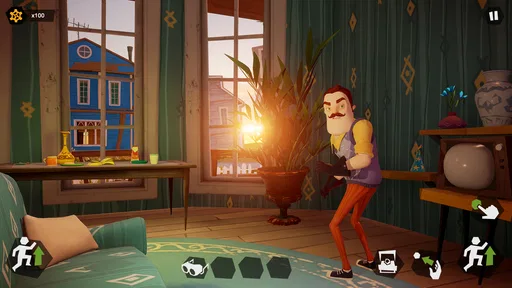
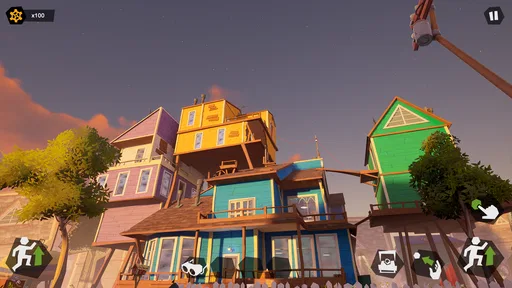
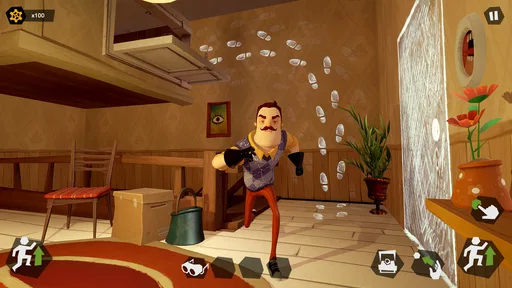
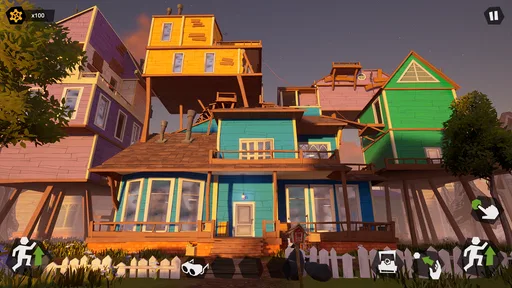
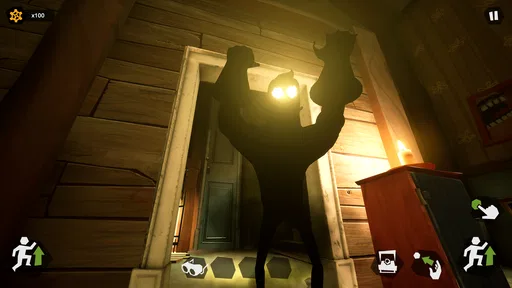
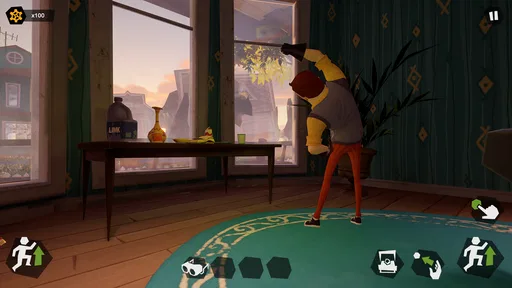
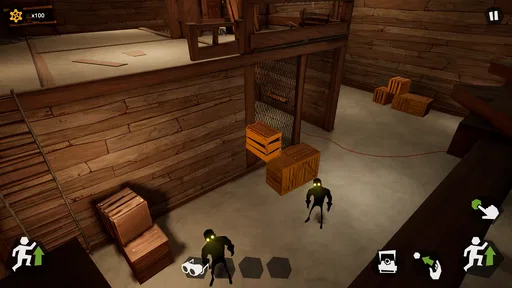
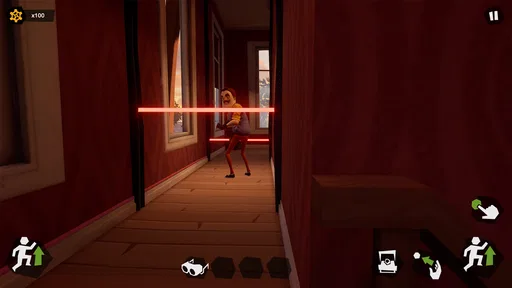
Our Review of Hello Neighbor Nicky's Diaries
 Analysis by Appyee
I approached Hello Neighbor Nicky's Diaries as a compact adventure game built around curiosity, tension, and the urge to investigate places that clearly do not want to be investigated. It comes from tinyBuild and presents itself as a spin-off of the original Hello Neighbor, but it is better understood as its own mobile-focused experience rather than a simple replay of the first game. The central appeal is easy to understand: explore, look for clues, solve environmental problems, and decide whether it is worth taking one more risk before retreating.
My first impression was that this is a game for players who enjoy atmosphere more than constant action. It asks me to pay attention to surroundings, remember useful objects, and learn from mistakes. That makes it a natural fit for short sessions when I want something more involved than a match-three game, although the suspense can make a supposedly quick session last much longer. It is free to start, carries an Everyone 10+ rating, and has reached over ten million installs, so it is clearly aimed at a broad mobile audience rather than only dedicated horror fans.
How the game feels during ordinary play
The most important performance question for a mobile adventure game is not simply whether it opens. It is whether movement, exploration, and repeated attempts feel responsive enough to keep the tension enjoyable. In this case, the speed of the experience depends heavily on how carefully I play. Rushing through an unfamiliar area is rarely the best approach, because observation is part of the challenge. I get more from the game when I slow down, check possible routes, and treat each failed attempt as information instead of immediately repeating the same mistake.
That slower rhythm also helps the game feel manageable on a phone. I am not constantly switching between menus or dealing with a complicated interface. The attention stays on the environment and on the next decision. For a mobile adventure, that is a useful design choice: I can pick it up during a break, understand what I was trying to do, and continue without needing the kind of uninterrupted commitment expected by a long console campaign.
There is a trade-off, though. Players who prefer instant action may find the early investigation pace too deliberate. The game’s appeal comes from anticipation, not from giving me a new spectacle every few seconds. If I want a straightforward platformer or a combat-heavy adventure, this is not the strongest alternative. Its tension works best when I am willing to observe, experiment, and accept that progress may come from understanding a situation rather than overpowering it.
The control experience is also something I would judge by comfort rather than by raw complexity. Touch controls can make precise movement feel less natural than using a physical controller, especially when I am trying to move carefully while watching for danger. That matters most in narrow spaces or during moments when a small mistake sends me back into a problem I thought I had solved. I would recommend spending a few minutes getting comfortable with the control layout before blaming the game for a failed escape.
What happens when the game gets busy
The heavier moments are not necessarily the scenes with the most visual activity. They are the moments when exploration, quick decisions, and repeated attempts all happen together. If I am searching for a solution while also trying to avoid detection, the mental load rises quickly. That is where the game earns its suspense, but it is also where mobile limitations become more noticeable: a small screen can make visual details harder to distinguish, and touch input leaves less room for careless movement.
I found that the best way to handle these situations is to divide them into smaller tasks. First I explore when the immediate risk is low. Then I identify an object, route, or clue that seems useful. Only after that do I attempt the more dangerous part. This approach is more reliable than wandering repeatedly through the same area. It also reduces the feeling that progress depends on luck, because every attempt has a specific purpose.
Another practical tip is to avoid playing in a rushed setting. A crowded commute or a noisy room can make a suspense game feel more frustrating than it really is. The visual clues deserve attention, and a missed detail can lead to unnecessary backtracking. I would rather play one focused session than several distracted attempts, particularly when I am learning how a location behaves.
Resource demand is difficult to separate from the individual device. A recent phone or tablet should provide a more comfortable experience than an older device near the minimum operating-system requirement. The game supports iOS 11 or later, which makes it broadly accessible in software terms, but operating-system compatibility does not guarantee identical results across every model. Hardware age, available storage, background activity, and battery condition can all affect how comfortable a session feels.
For that reason, I would avoid judging performance from the first minute alone. Let the game run through a normal exploration session and pay attention to whether the device becomes unusually warm, whether battery use feels excessive for your phone, or whether input starts to feel less consistent. These are practical signs that the device may be working hard. Closing other demanding apps before playing is a sensible step, especially on an older phone, even though it cannot transform hardware that is simply below the comfortable range.
Stability, interruptions, and recovering from a mistake
Reliability matters more in a suspense game than many players expect. If a session is interrupted or a failed attempt feels difficult to recover from, tension turns into irritation. My preferred way to play is to treat each run as a learning cycle: explore, test an idea, notice what went wrong, and return with a clearer plan. That mindset makes setbacks less punishing and helps the game’s stealth-oriented atmosphere work in its favor.
Recovery is particularly important for people playing in short bursts. If I only have a few minutes, I want to know what I was doing when I return. Before closing the game, I try to finish a small objective or at least mentally note the next action. That simple habit prevents the common mobile problem of reopening a game and spending the entire session trying to remember why I was standing in a particular room.
Players should also expect the usual friction that comes with a free mobile game. The title is free to download, but in-app purchases are listed at $6.99 per item. That does not automatically make the experience poor, yet it is worth keeping in mind before starting. I would approach it as a game to sample first, then decide whether the available experience justifies spending money. Someone who strongly prefers a one-time purchase with no additional buying decisions may feel more comfortable with a premium adventure instead.
The age rating of Everyone 10+ suggests a wider audience, but the mood can still be uncomfortable for younger or more sensitive players. Suspense, pursuit, and the feeling of being watched are central to the experience even when the presentation is not aimed at adults. I would consider the individual player’s tolerance for tension rather than relying on the age label alone.
Older devices and practical expectations
The minimum operating-system requirement of iOS 11 or later makes the game available to many users, but availability is not the same as ideal performance. On an older compatible device, I would keep expectations realistic. The game may be playable while still feeling less comfortable during demanding exploration, particularly if the phone has limited free space or several apps competing for memory.
Storage management is worth handling before installation. A nearly full device can make any game feel less dependable, and it leaves little room for the operating system to work comfortably. I would also avoid starting a long session with a nearly empty battery. Adventure games are more enjoyable when I am not constantly watching the battery indicator or worrying that an interruption will end the attempt.
Screen size changes the experience more than people often expect. On a larger tablet, environmental clues and routes should be easier to inspect, while a compact phone is more convenient for quick play but may make small details harder to read. I would choose the larger screen when solving a difficult section and the phone when convenience matters most. That is not a reason to reject the game on a smaller device, but it is a genuine trade-off for players who rely on visual observation.
This is also not the best choice for someone who wants a game that performs identically across every device. Mobile hardware varies too much for that expectation to be realistic. If stable, high-end presentation is your priority, a console or computer version of a comparable adventure may offer a more predictable environment. If convenience and portability matter more, the mobile format remains attractive because I can investigate a few rooms without setting aside an entire evening.
Who will enjoy the design most
I would recommend this game to players who like the Hello Neighbor style of mystery, environmental problem-solving, and suspenseful exploration. It works particularly well for someone who enjoys forming theories from visual details instead of being handed every answer immediately. The spin-off framing also makes it approachable for a player who knows the original series but wants a mobile experience that does not require treating the phone like a full console.
It can be a good choice for an everyday scenario such as a quiet lunch break or an evening when I want a story-flavored game but do not have time for a long multiplayer match. I can play until I reach a natural stopping point, then return later with a specific clue or route in mind. The best sessions are focused rather than frantic, so it suits a player who can enjoy gradual progress.
I would skip it if you dislike trial and error, become annoyed by repeating an area after a mistake, or want immediate clarity about what to do next. I would also choose another game if my main goal were competitive play, deep character customization, or a large open world. This adventure is narrower and more deliberate. Its strength is the mood created by uncertainty, not the amount of content visible on a map.
Compared with a typical casual puzzle game, it demands more attention and offers a stronger sense of place. Compared with a traditional horror game, it is less about constant shocks and more about the pressure of exploring a suspicious environment. Compared with a full-length console adventure, it is easier to fit into mobile routines but may feel less comfortable for players who want precise physical controls. Those comparisons helped me understand where it belongs: between accessible mobile exploration and tense stealth-style problem-solving.
What I would do before spending money
I would begin with the free experience and test three things: how comfortable the controls feel on my device, whether the visual details are easy to read on my screen, and whether the slower investigative pace holds my attention. Those checks are more useful than judging the game from its premise alone. If I enjoy learning the environment and returning with better plans, the purchase option becomes a personal decision rather than an impulse.
The listed current version is 1.4.4, and the game has a 4.1 average from around forty thousand ratings, alongside roughly nine hundred written reviews. Those figures suggest that many players have found something worthwhile, but they should not replace personal testing. A rating cannot tell me whether a particular phone handles the game comfortably or whether its suspense-based structure matches my taste.
The large install figure, now above ten million, does show that the concept has reached a substantial mobile audience. I see that as a useful signal for newcomers who are wondering whether the spin-off is obscure or unsupported, but popularity is not the same as universal appeal. The real question is whether I enjoy the combination of exploration, uncertainty, and repeated problem-solving.
My performance verdict
My overall view is that Hello Neighbor Nicky's Diaries is most convincing when I treat it as a focused adventure rather than a quick distraction. Its perceived speed is intentionally measured, its busiest moments reward preparation, and its comfort depends more on the device and screen than a simple compatibility label can show. The game benefits from short, attentive sessions, while hurried play makes its controls and visual clues feel more demanding.
tinyBuild has shaped this spin-off for players who want the Hello Neighbor atmosphere in a portable format. I like that it gives me reasons to inspect a space instead of merely passing through it, and I appreciate the way failed attempts can teach me something when I pay attention. At the same time, I would not recommend it blindly to someone seeking action, flawless touch precision, or a completely frictionless free-to-play experience.
My recommendation is to try it first on the device you actually plan to use, preferably in a calm setting where you can judge its controls, visual clarity, and pacing fairly. If the first exploratory sessions make you curious about what is behind the next door, the game has done its job. If they make you impatient with searching and retracing steps, another adventure or a more direct action game will probably be a better use of your time.
Verdict
Strengths of Hello Neighbor Nicky's Diaries
- Atmospheric visuals create a creepy, polished cartoon-horror experience.
- Short sessions make it easy to play on mobile devices.
- Exploration rewards curiosity with hidden paths and useful discoveries.
- The neighbor’s presence adds tension without constant combat.
- Touch controls are simple to learn and responsive in most situations.
Limitations of Hello Neighbor Nicky's Diaries
- Frequent trial-and-error can feel frustrating during tougher puzzles.
- Some areas are difficult to navigate without clear objective guidance.
- The story may feel brief for players expecting a full-length adventure.
- Stealth encounters can become repetitive after extended play.
- Performance may vary on older phones or lower-end tablets.
Other Releases by tinyBuild
View All
Hello Neighbor
Adventure3.9
Similar Picks in This Category
View All
Roblox
Roblox Corporation4.2

Pokémon GO
Niantic, Inc.3.5

Ninja warrior: legend of adven
TOH Games4.6

Ninja Arashi
Black Panther4.6

Eyes - The Horror Game
Fearless Games sp. j.4.5

Critical Action:Gun Strike Ops
FPS Shooter & Action Game4.3
Frequently Asked Questions
What is Hello Neighbor Nicky’s Diaries?
Hello Neighbor Nicky’s Diaries is a mobile stealth-horror adventure game connected to the Hello Neighbor universe. You play as Nicky, exploring locations, solving environmental puzzles, collecting useful items, and trying to uncover secrets while avoiding the mysterious Neighbor. The game focuses more on discovery and puzzle-solving than direct combat, creating a tense experience built around hiding, planning, and experimentation.
How does the gameplay work in Hello Neighbor Nicky’s Diaries?
The main gameplay loop combines exploration, stealth, and puzzle solving. You must observe the environment, find objects that help unlock new areas, and work out how to bypass obstacles without being caught. The Neighbor can react to your actions, so repeatedly using the same route may not always be safe. Patience is important, especially when learning patrol patterns and deciding when it is better to hide or retreat.
Is Hello Neighbor Nicky’s Diaries suitable for children?
Although the game uses a stylized cartoon presentation, it includes suspenseful scenes, chase sequences, frightening moments, and the constant threat of being discovered. It may be appropriate for older children depending on their sensitivity to horror and stealth gameplay, but parents should review the store age rating and available content information before downloading. Younger players may find the tension or sudden encounters unsettling.
Can Hello Neighbor Nicky’s Diaries be played offline?
Some parts of Hello Neighbor Nicky’s Diaries may work without a continuous internet connection, particularly after the game and required data have been installed. However, internet access can still be necessary for the initial download, updates, account-related features, advertisements, or purchases, depending on the version and platform. It is best to check the current store listing and test offline access before relying on it during travel.
Is Hello Neighbor Nicky’s Diaries free to download?
Availability and pricing can vary between Android and iOS, as well as by region and store policy. The game may be offered as a free download with optional purchases, advertisements, or other restrictions, while some versions or content may require payment. Before installing, check the official Google Play or App Store page for the exact price, in-app purchase details, supported devices, and storage requirements.
Play our best games!


